
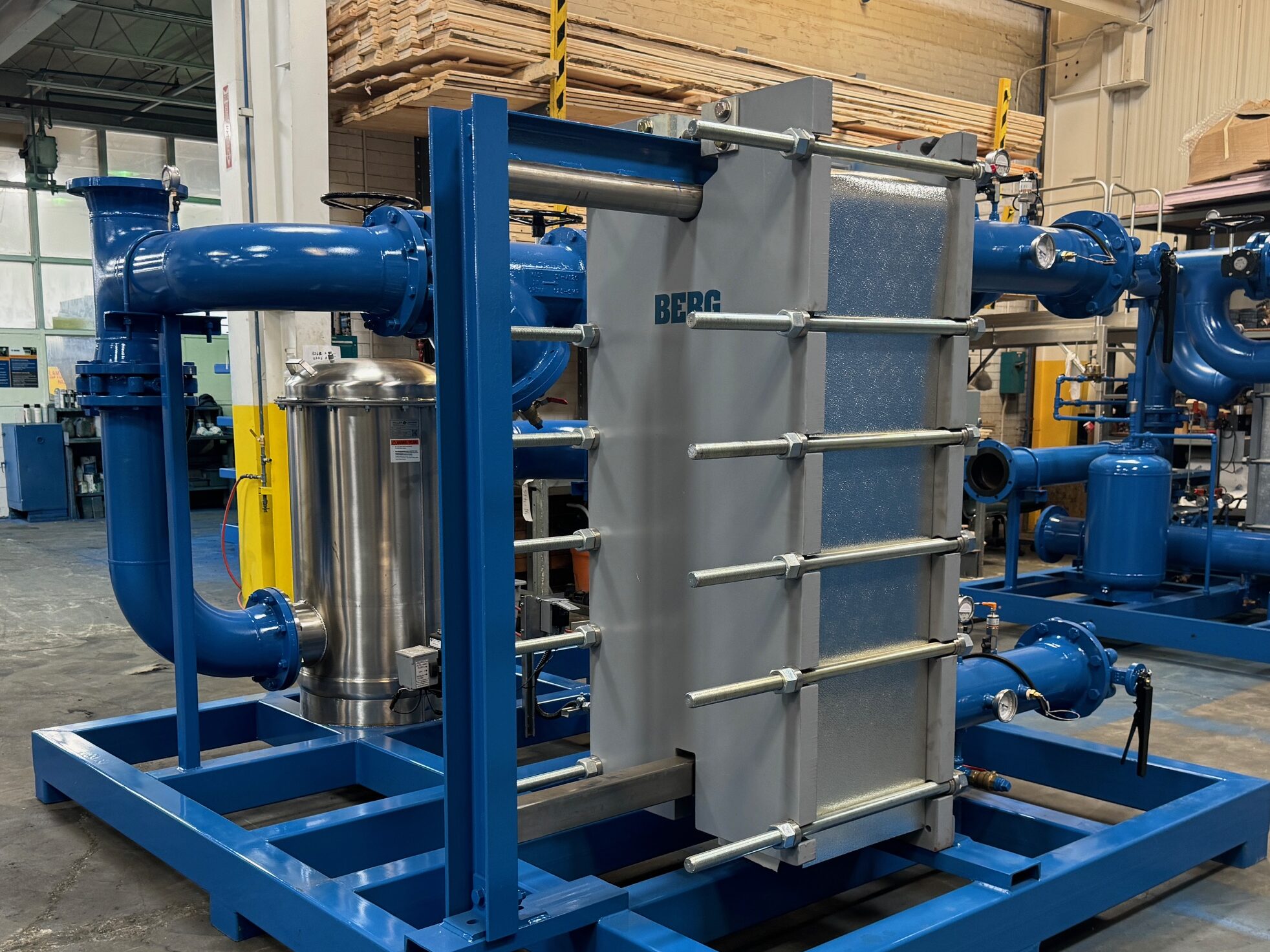
Treat an exchanger replacement as a plant modification
A replacement exchanger must fit the existing operating facility—not just match a thermal datasheet. Nozzle orientation, bundle-pull envelope, access, structural support, foundation condition, platforms, drains, isolation points, clearance, lift/removal path, and nearby piping can all determine whether an otherwise correct unit is installable.
Fouling, corrosion, plugging, cleaning difficulty, space constraints, and performance degradation are also relevant to the engineering basis. Available operating, inspection, temperature, flow, and pressure-drop history can make the RFQ more specific and reduce late field decisions.
Coordinate civil and structural scope with mechanical installation
Replacement projects often require equipment supports, foundations, structural steel, platforms, ladders, drainage, temporary conditions, and access modifications. Steel-work planning may involve hoisting, rigging, bracing, welding, bolting, and temporary-support interfaces that should be identified before outage mobilization.
Existing drawings can differ from actual conditions. A field review or 3D laser scan helps verify dimensions and identify clashes before fabrication or construction begins. This is especially useful when an operating plant has congested routing, limited laydown area, or a short outage window.
Plan isolation, change management, and construction sequencing
Equipment servicing can involve unexpected energization, startup, and stored-energy hazards. The responsible owner and employers need plant-specific isolation boundaries, procedures, and work controls before field execution. Where a covered process is affected, the owner must also determine whether its management-of-change process applies.
An RFQ-ready scope documents the equipment basis, available drawings, operating history, outage window, access and lifting constraints, applicable owner standards, required deliverables, and construction interfaces. Grey Engineering can coordinate those inputs across mechanical, civil, structural, piping, electrical/I&C, procurement, and field installation disciplines.
These public references support the planning context in this guide. Final project requirements must be confirmed for the specific facility, scope, authority, and contract.