
Heat Exchanger Design & Fabrication
Shell-and-tube and plate-and-frame heat exchanger design, thermal rating, fabrication, retube, and replacement — TEMA standards and ASME code construction.
Shell-and-Tube Exchangers
We design shell-and-tube heat exchangers to TEMA standards with ASME Section VIII code construction — thermal rating, tube sheet design, bundle layout, and vibration screening. We also manage retube projects and bundle replacements on existing exchangers, including tube sheet inspection, tube pulling, and re-rolling in the field.
Plate-and-Frame Exchangers
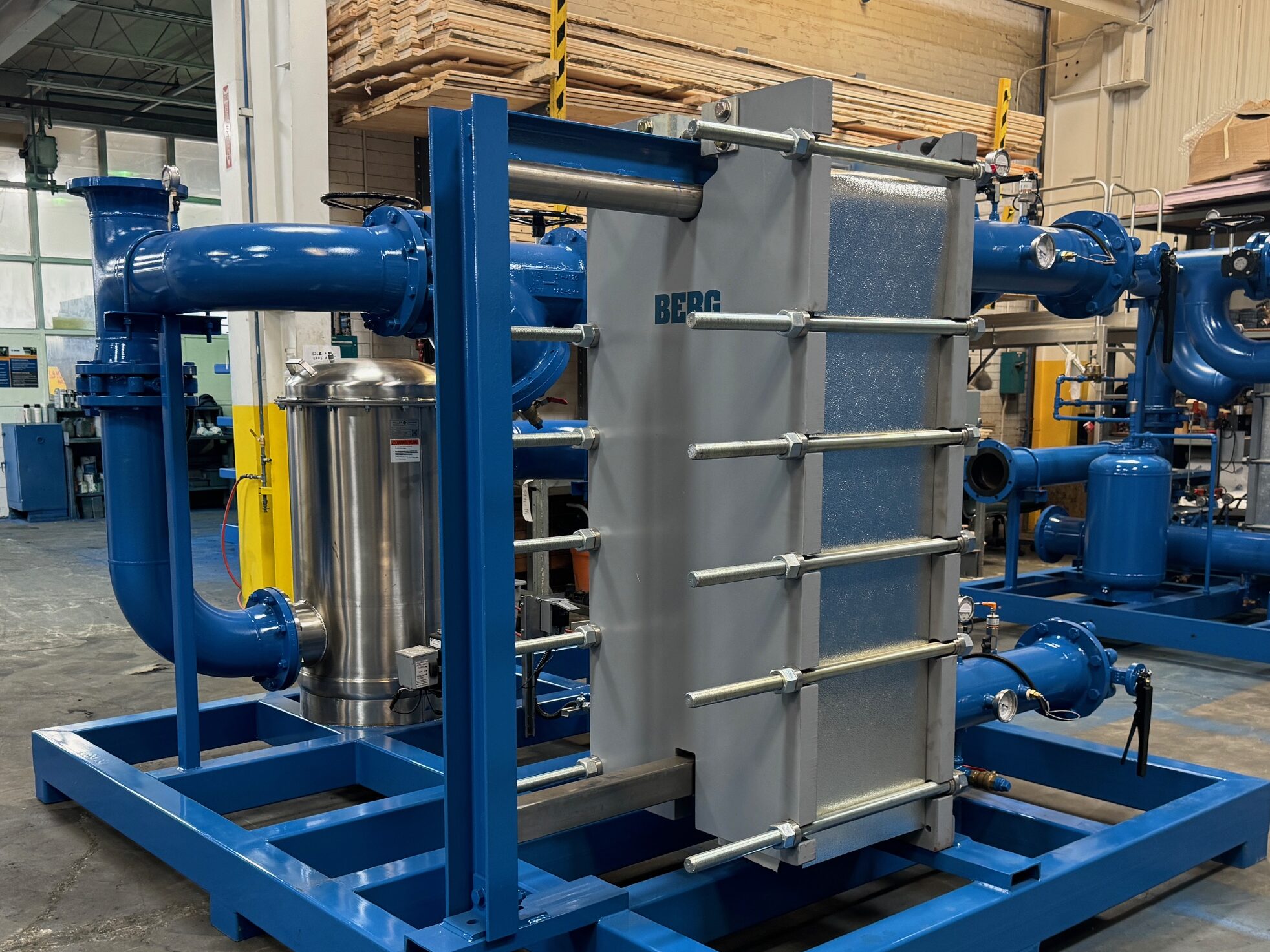
For compact, high-efficiency duties we design and construct plate-and-frame heat exchanger installations: thermal sizing, plate pack selection, frame and foundation design, and complete piping integration with isolation and bypass provisions for maintainability.
Replacement Without Surprises
Exchanger replacements inside operating plants demand accurate as-builts. We 3D laser scan the installation envelope, verify nozzle orientations against existing piping, and deliver exchangers that fit the first time — minimizing outage duration.
Common questions about Heat Exchangers
What is the difference between a shell-and-tube and a plate-and-frame heat exchanger?
A shell-and-tube heat exchanger transfers heat between two fluids through a bundle of tubes enclosed in a cylindrical shell. It is robust, handles high pressures and temperatures, and is the most common type in industrial plants. A plate-and-frame heat exchanger uses corrugated metal plates to transfer heat and is more compact and thermally efficient for moderate pressures and temperatures. Grey Engineering designs and constructs both types to TEMA, ASME, and manufacturer standards.
When should a heat exchanger be retubed versus replaced?
Retubing is cost-effective when the shell and tube sheet are in good condition and only the tube bundle has failed due to corrosion, erosion, or fouling. Replacement is warranted when the shell is corroded, the tube sheet is cracked, or when a capacity or material upgrade is needed. Grey Engineering performs tube sheet inspections and wall thickness assessments to make the correct recommendation before committing to either scope.
How does 3D laser scanning improve heat exchanger replacement projects?
3D laser scanning captures the existing nozzle orientations, elevation, and surrounding piping as a millimeter-accurate point cloud before the replacement exchanger is fabricated. This eliminates dimensional surprises during installation, ensures the new exchanger fits the existing piping without field modifications, and compresses outage duration — which is critical in operating plants where every hour of downtime has a cost.