
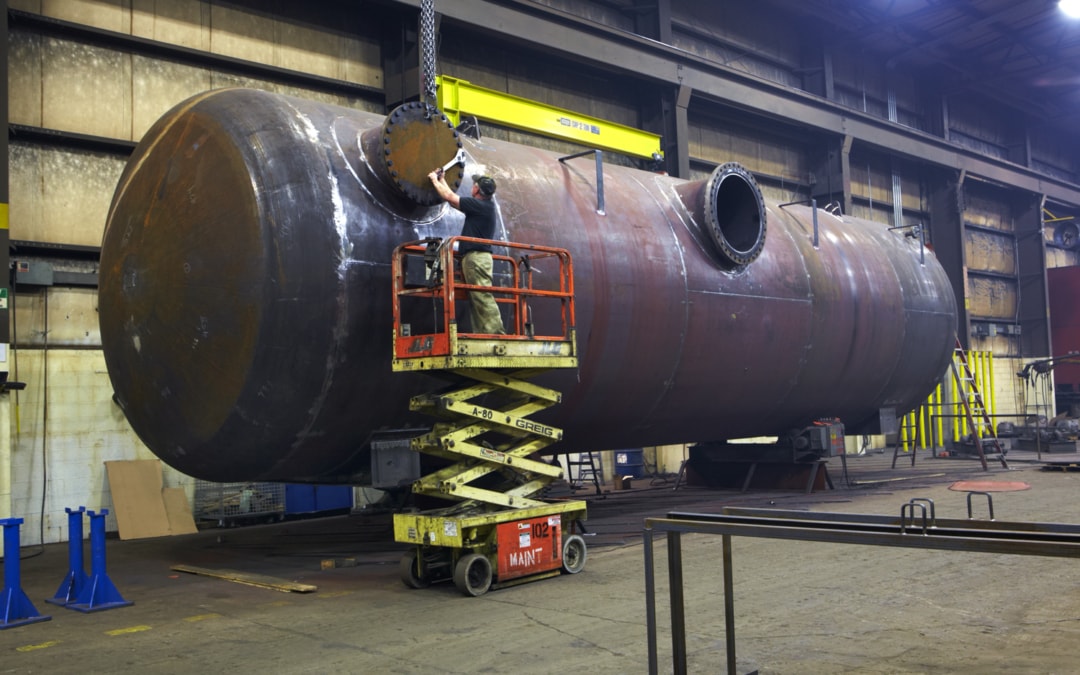
A vessel RFQ begins with a disciplined design basis
Pressure-vessel procurement becomes difficult when bidders must guess the service conditions, materials, pressure and temperature basis, corrosion allowance, connections, instrumentation, relief interface, supports, inspections, testing, documentation, and installation constraints. The result is often non-comparable bids and late coordination changes.
An RFQ-ready package organizes the process and mechanical basis with practical site information: available datasheets, preliminary drawings, operating envelope, utility connections, space claim, nozzle orientation, access, rigging, and target schedule. That package provides a common starting point while leaving final governing requirements to the project team and appropriate authorities.
Coordinate engineering, fabrication, inspection, and construction
A pressure vessel affects more than the fabricator. Piping, structural supports, foundations, electrical and controls, platforms, insulation, lifting, transport, laydown, and outage sequencing must align before the vessel arrives. Field verification and 3D scanning can reduce conflicts when a replacement must fit an existing operating facility.
ASME Section VIII contains rules for pressure-vessel construction within its stated scope, while ASME certification applies to a manufacturer or assembler's qualified quality-control system. Project coordination should never imply that an engineering firm is the vessel manufacturer, code-stamp holder, Authorized Inspection Agency, or repair organization unless that status is separately verified.
Plan inspection, testing, documentation, and turnover early
Define the required documentation and quality hold points before purchase: drawing review, material documentation, welding documentation where applicable, examination and test coordination, shipping preservation, receipt inspection, installation interfaces, and final turnover records. The applicable code edition, jurisdiction, owner specification, and acceptance authority belong in the project controls—not as a generic web-page promise.
For repairs, alterations, or in-service equipment, confirm the equipment records, jurisdictional requirements, inspection-agency involvement, and applicable lifecycle standard before assigning scope. Grey Engineering can help turn those interfaces into a concise, NDA-safe RFQ package.
These public references support the planning context in this guide. Final project requirements must be confirmed for the specific facility, scope, authority, and contract.